
Liquid cooling is one of the most talked-about technologies in the data center industry. With the rapid rise of artificial intelligence (AI) and increasingly powerful servers, interest in this cooling technology is growing. But how exactly does liquid cooling work? How does it differ from traditional air cooling? And does it mean data centers will soon be moving away from air cooling altogether?
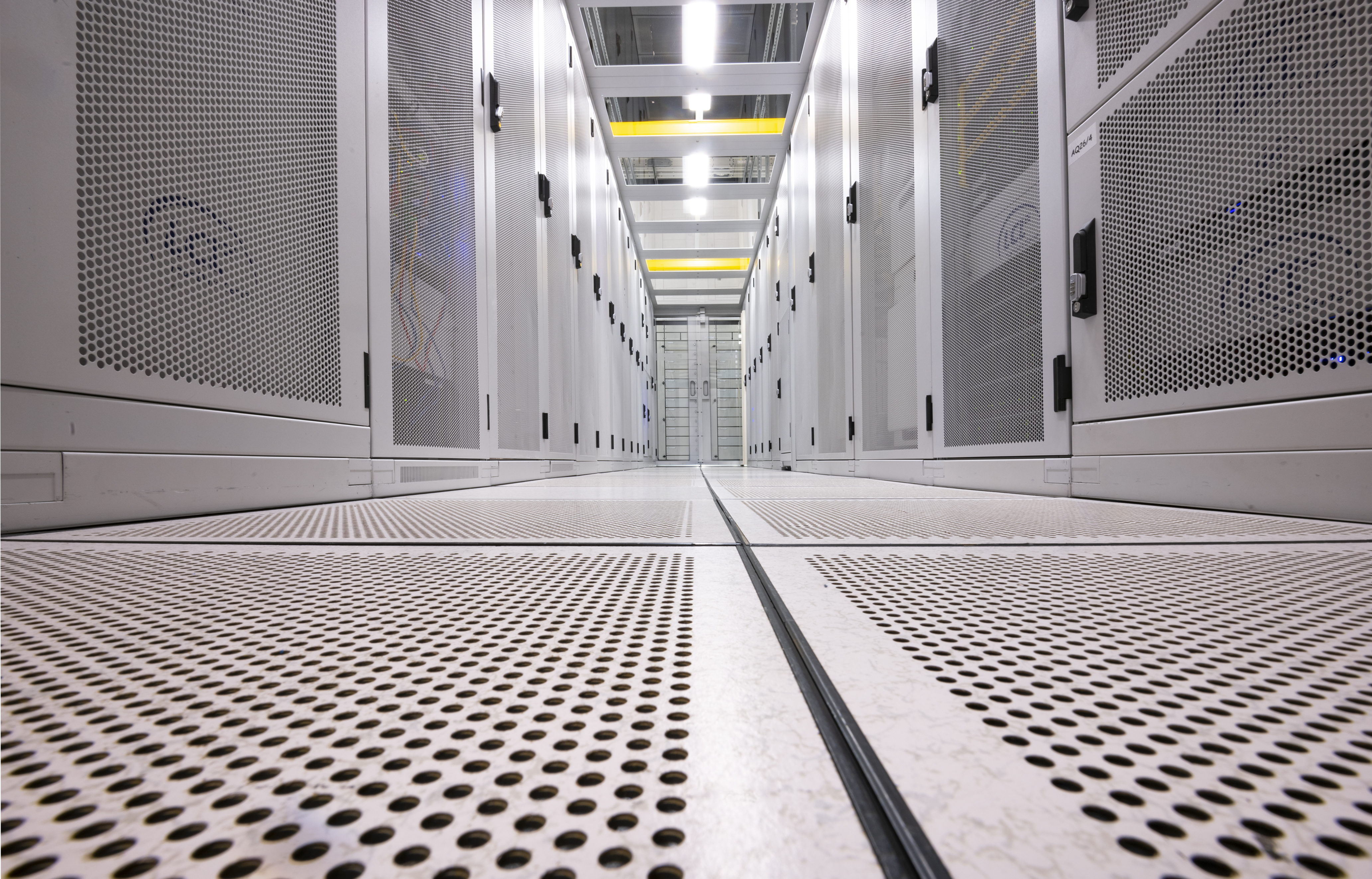
Servers generate a significant amount of heat. To prevent overheating and maintain optimal performance, that heat needs to be continuously removed. Most data centers rely on air cooling to do this. Cool air flows through and around the servers, absorbs the heat and is then cooled again before being recirculated. This is also how cooling currently works at LCL. However, that doesn't mean water isn't involved.
"Water already plays an important role in our cooling systems," explains Adeline Wantiez, Project Manager Design at LCL. "We use chilled water to cool down the warm air. This water circulates in a closed-loop system and is continuously reused. We don't use evaporative cooling, so no water is consumed as part of the cooling process."
The key difference with liquid cooling is that, in a traditional air-cooled setup, water never reaches the servers themselves. Instead, heat is transferred through the air. For servers with lower power densities, this approach works well. But as power densities increase, more cooling capacity may be needed. That's where liquid cooling comes in.
Liquid cooling uses a liquid to remove heat generated by servers. Depending on the technology, this happens either at the rear of the server rack or directly at heat-generating components, such as processors. Liquids such as water can carry significantly more heat than air. By capturing heat closer to its source, liquid cooling systems can remove much larger amounts of heat, making them particularly effective for high-density IT environments.
The principle itself is nothing new. Think of how a car engine is cooled, or the liquid cooling systems that have been used in high-performance gaming PCs for years. So why is liquid cooling attracting so much attention now? The answer lies largely in the increasing power density of modern servers.
Artificial intelligence requires enormous computing power. Training and running complex AI models often involves large numbers of powerful graphics processing units (GPUs), designed to process vast amounts of data in parallel. Modern AI servers combine multiple GPUs, significantly increasing the power requirements of individual servers and racks. This allows more computing power to be packed into a smaller space, but it also generates much more heat.
For traditional server racks with relatively low power densities, air cooling is generally more than sufficient. However, the high densities associated with AI workloads can push conventional air cooling to its limits. Liquid cooling makes it possible to manage these higher heat loads effectively, supporting the growing computing demands of AI applications.
Not all liquid cooling systems work in the same way. The main difference lies in how close the cooling liquid gets to the components generating the heat. There are three main approaches.
With rear-door cooling, a heat exchanger is installed at the back of the server rack. As warm air leaves the servers, it passes through the heat exchanger, transferring its heat to the cooling liquid. The liquid is brought closer to the servers, but heat is still transferred through the air. This approach provides additional cooling capacity without requiring modifications to the servers themselves.
With direct-to-chip cooling, liquid flows through pipes to cooling plates mounted directly onto heat-generating components, such as CPUs and GPUs. This allows heat to be captured directly at its source, making direct-to-chip cooling particularly well suited to high-density servers.
With immersion cooling, servers are submerged in a specially designed, electrically non-conductive liquid. The liquid absorbs heat directly from the electronic components. This technology can handle extremely high heat loads, but it requires dedicated infrastructure and specific maintenance procedures. As a result, it is less widely used than other liquid cooling techniques.
Liquid cooling offers clear advantages when dealing with high power densities. But that doesn't mean air cooling is on its way out. For many applications, it remains a reliable and efficient solution. "For traditional server racks with lower power densities, air cooling is still an excellent option," Adeline emphasises. "Liquid cooling requires additional equipment, investment and maintenance. So there's little benefit in switching every existing server to liquid cooling simply for the sake of it."
Even in many liquid-cooled servers, certain components still rely on air cooling. Rather than competing technologies, the two approaches often work alongside each other. The most suitable cooling solution depends on several factors, including power density, the IT equipment being used and the customer's specific requirements.
Introducing liquid cooling doesn't just affect the servers. It also has implications for the wider data center infrastructure. High-density racks require more electrical power, so the electrical infrastructure must have sufficient capacity to support them. Additional cooling equipment, pipework, heat exchangers and Coolant Distribution Units (CDUs) are also needed to deliver cooling liquid to the racks.
Existing data centers can be adapted to accommodate liquid cooling, although this may require substantial infrastructure upgrades. For new facilities, it makes sense to factor future cooling requirements into the design from the outset. LCL is already preparing for this shift. The newest data center at its LCL Brussels-North site has been designed to accommodate liquid cooling. Existing data halls are also being adapted to support customers with more demanding cooling requirements. For example, LCL is currently working on converting a data hall to make liquid cooling possible.
"Liquid cooling isn't a one-size-fits-all solution," Adeline concludes. "The technology needs to match the customer's servers and specific requirements. That's why we assess each situation individually to determine the right infrastructure and cooling setup."
Ultimately, the future of data center cooling isn't about choosing between air and liquid cooling. It's about finding the right balance between the two. By matching cooling technologies to IT equipment and customer requirements, data centers can continue to meet growing demand for computing power while maintaining the reliability and efficiency their customers depend on.
Wondering which cooling solution is right for your IT infrastructure? Discuss your options with our experts.

Subscribe to our newsletter and receive monthly news about LCL, our innovations, our services, our events