LCL has successfully completed the first phase of the major cooling upgrade at LCL Brussels-West. The critical operation is part of a multi-year effort to future-proof LCL’s data centers with more efficient and sustainable infrastructure. Crucially, all work took place while the site remained fully operational. That demanded careful planning, detailed risk-planning, a skin close coordination and a clear, proactive and continuous communication with customers throughout the process.
“The first phase of upgrading a live environment went flawlessly”, says LCL’s Project Manager Adeline Wantiez. “In close alignment with our customers, we prepared every scenario to reduce the risk of downtime to an absolute minimum.” Olivier Bouvry, Data Center Lead Architect at Fujitsu, confirms: “We looked at this operation the way you should look at any critical change. In the end, everything stayed perfectly calm, which is exactly what you want in a live data center.”
Adeline Wantiez: “We are replacing all legacy cooling units with a new integrated and sustainable system. Beforehand, we ran extensive tests what happens if a unit is switched off? How do the others respond? What if two units fail at the same time? We even installed temporary cooling. Under every imaginable circumstance, our top priority was to keep the data center fully operational. Today, the new chillers are already cooling the server rooms of LCL Brussels-West. Part of our customers, including Fujitsu, have been involved in that successful transition.”
Olivier Bouvry: “When we received an invitation for a dedicated briefing, we knew immediately this was a significant project. Once we saw the plans, we updated our disaster-recovery scenarios and built a new risk assessment. We looked at it through the classic lens: low probability, high risk. That meant being ready to absorb even the smallest chance of disruption. We reviewed our business-continuity procedures, monitored constantly, and informed our customer of our preparedness. Ultimately, this exercise remained theoretical because everything stayed stable. There were no critical deviations throughout the project.”
Adeline Wantiez: “Communication is the golden thread. In a live environment, you can’t just move equipment or disconnect units. We plan every step with our customers, down to the hour if needed. Before each phase we provide a detailed walkthrough: what will happen, which areas are temporarily closed, what the physical impact will be. When everyone knows what to expect, everything goes more smoothly. And every customer suggestion feeds our lessons learned for the next phase.”
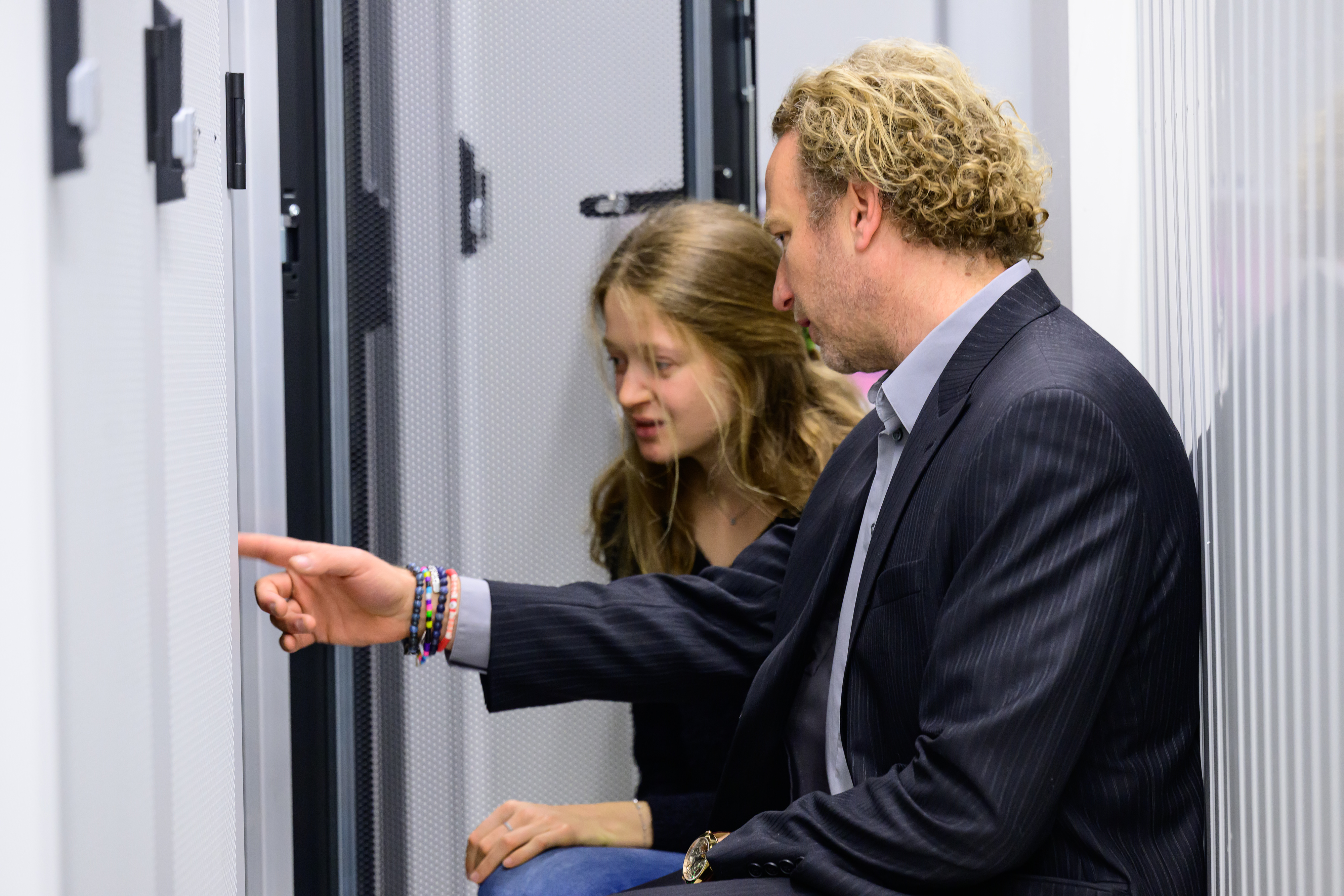
Olivier Bouvry: “Transparency is essential and builds trust. Adeline gave a clear and complete presentation, so there were no surprises, no hidden risks. Based on her input, we could refine our own risk analysis. We – that is: both LCL and Fujitsu – monitored very closely what happened in the server rooms. We noticed that whenever there were slight temperature variations, LCL reacted immediately. That responsiveness builds trust. By the way, this is typically LCL: if you call someone, you get answers and action within a day. That high availability is priceless.”
Adeline Wantiez: “Some disruption is inevitable. For example, we had to temporarily close the parking area to lift the new dry air coolers onto the roof. By communicating early and clearly, people understand why it’s happening. They understand that the long-term sustainability benefits far outweigh short-term inconvenience.”
Olivier Bouvry: “It was our first time experiencing such major works in a live data center. Internally, our change managers and customers needed visibility on the risks. LCL respected all our ‘red periods’, where no interventions are allowed. That discipline builds trust, since you earn trust by listening and sticking to agreements.”
"LCL’s upgrade improves the ESG footprint of our value chain, and we can tell our customers their data is now hosted even more efficiently. Every stakeholder wins.”
Adeline Wantiez: “The new system is more energy-efficient and uses refrigerants with a much lower Global Warming Potential (GWP). We reduced the surface area of the refrigerant piping, which limits potential leak points. In the new design, the refrigerant is contained within the chillers only and no longer runs through the piping. As before, the installation operates entirely without city water, a deliberate choice that we maintained in the new design. And by allowing slightly higher room temperatures, we maximise free cooling (using outside air instead of compressors), significantly reducing energy consumption.”
Olivier Bouvry: “Quite so. They align perfectly with Fujitsu’s sustainability roadmap. We committed to be carbon-neutral by 2030 for our own operations, and 2040 across the value chain. LCL’s upgrade improves the ESG footprint of our value chain, and we can tell our customers their data is now hosted even more efficiently. Every stakeholder wins.”
Adeline Wantiez: “We take every lesson from phase one into phase two, especially around coordination. When you upgrade a live site, every detail matters.”
Olivier Bouvry: “Communication must go both ways, continuously. You have to fully understand the risks, update your recovery plan and be ready. Of course, you should also have a partner you can trust. With LCL, we always felt everything was under control.”
Adeline Wantiez: “I fully agree with Olivier. Genuine sustainability progress happens only when everyone collaborates: technically, operationally and in how we communicate.”
Olivier Bouvry: “We are literally in the same boat: zero downtime, better cooling, lower energy consumption. With trust and transparency, you move forward together.”
Subscribe to our newsletter and receive monthly news about LCL, our innovations, our services, our events