When most people think of a data center, they picture a silent, concrete colossus: functional. Anonymous. Built for machines. LCL chooses a different path. Under the impulse of its art-loving CEO Laurens van Reijen, who named quite some meeting rooms after icons like Panamarenko and Corneille and never settles for ‘business as usual’, our new data center along the Brussels Ring will not just process data, it will tell a story.
That story takes shape through a monumental artwork by sculptor Luk Van Soom: a floating cloud, hoovering high over the five-storey-high façade of LCL’s brand new data center. To make this happen, Van Soom teamed up with Studio Pijnenburg en Bela Zsigmond. A poetic landmark, visible from afar, turning a technical building into a symbol of imagination, connectivity and the invisible worlds of data. ‘De Wolk’ (The Cloud), as this wonderful piece of art is called, talks about Luk Van Soom’s fascination with clouds, craftsmanship in the digital age, and why a data center might just be the perfect place for poetry.
Luk Van Soom: “Not really. A data center is not the typical place where you expect art. But maybe that’s exactly why it felt right. These buildings are everywhere, hidden in plain sight, while they carry the invisible infrastructure of our world. That fascinated me immediately. In a way, a data center is a cathedral of the 21st century.”
“Yes, and I like that tension. We all talk about ‘the cloud’ as if it is something intangible, almost magical. Yet it’s stored in very concrete places, like LCL’s data center. I wanted to bring that abstraction back into a physical, poetic form. The cloud is a symbol of what can be seen, yet never truly held. It connects the real world with what lies beyond. In religions, in art history, in baroque churches… clouds are always the bridge between earth and heaven. Here, the cloud becomes a bridge between the human world and the digital one.”
“That is inspired by Jacob’s Ladder from the Bible. For those who don’t know the story: Jacob dreamt of a ladder between heaven and earth, with angels moving up and down. For me, that ladder is a symbol of connection, of movement between worlds. In LCL’s case, I see it as a go-between for people, data, technology and imagination. Data travels constantly, just like those angels. The ladder is also a metaphor for progress, curiosity and the human urge to go beyond what is visible."
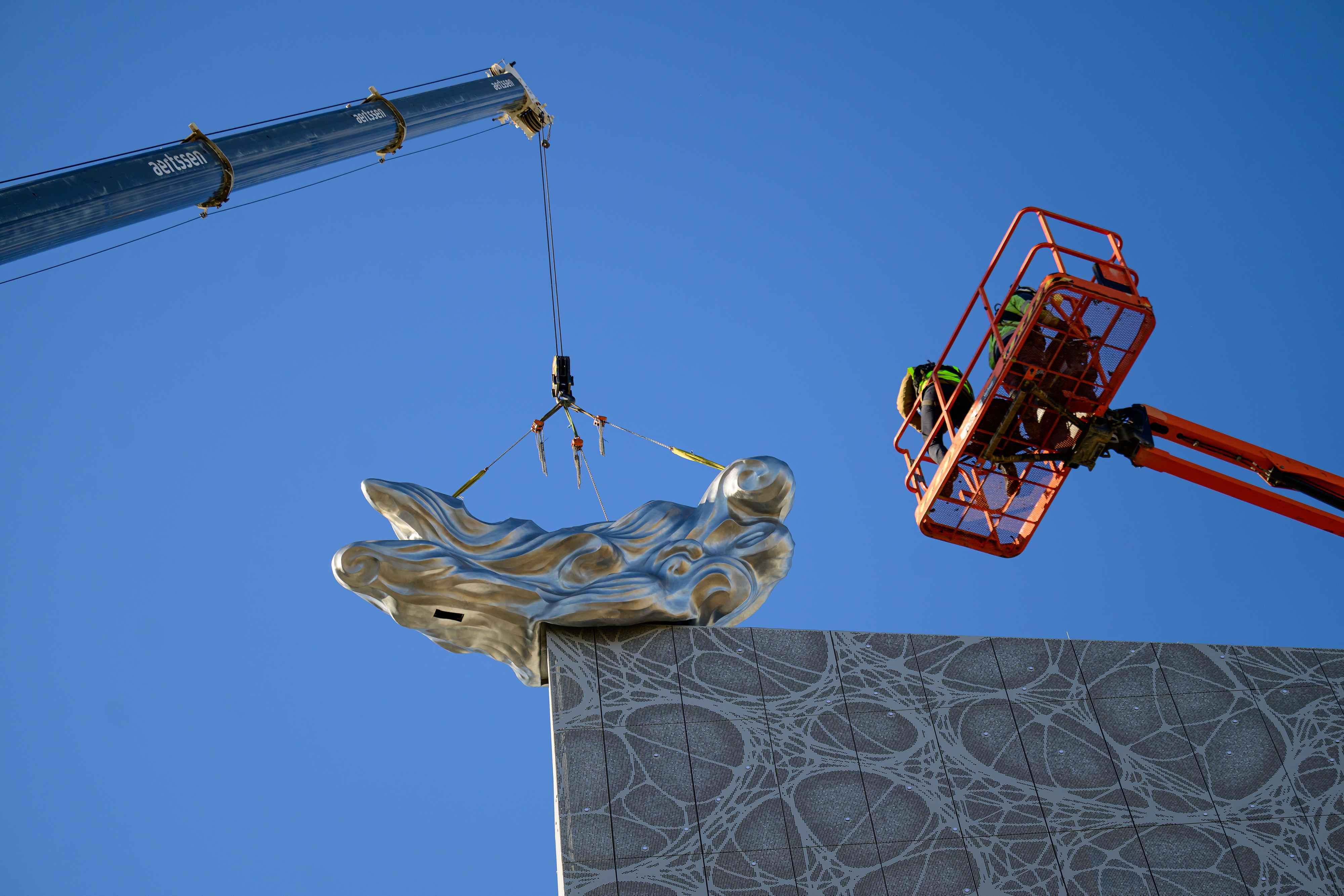
“Because the questions are still the same. Humans have always tried to understand invisible forces: time, destiny, the universe, and now also data. I draw inspiration from the Italian sculptor and architect Bernini, from the Sistine Chapel, from baroque churches in Italy and Southern Germany. Those artists created illusions of weightlessness, of skies opening and figures floating. Today, we live surrounded by invisible networks and signals. I see a strong parallel. My work tries to connect those worlds visually.”
“After the idea for the cloud sculpture had taken shape, chief architect Luc De Hovre and I defined how the tower itself could manifest. We wanted to avoid a purely utilitarian appearance, so we approached the tower's expression with particular attention to its artistic presence. That’s why I invited designer René Pijnenburg to think along with us. Together with Béla Zsigmond, he conducted a design-based research into possible approaches.”
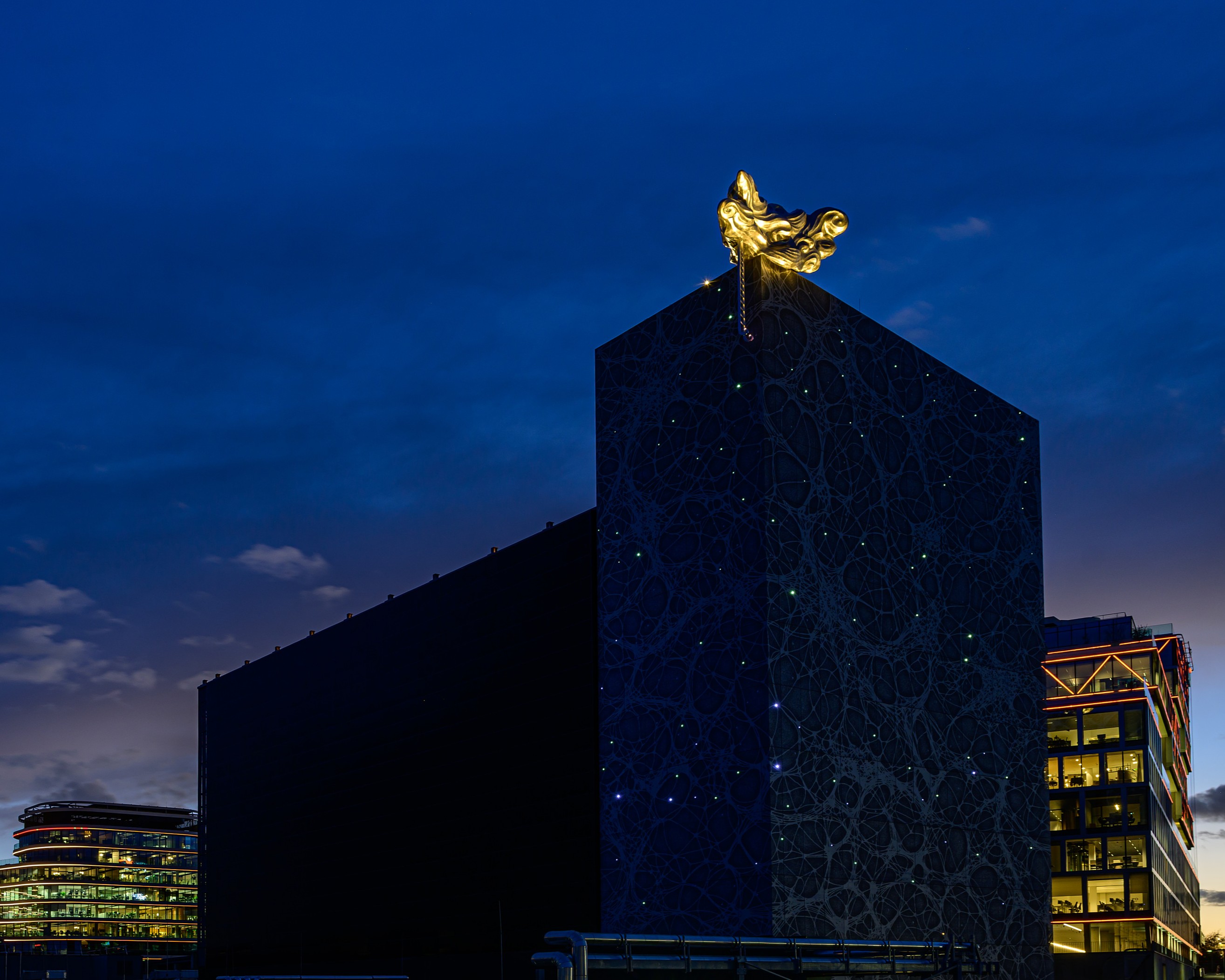
“From these different lines of thought, we gradually developed a concept for a façade that changes on a daily basis, with the idea of the network at its core. The technical realisation in perforated metal and integrated led lighting is the result of an intensive collaboration between various partners. Cloud and façade form an integral whole, continuously surprising the viewer, depending on the moment at which the building is passed.”
“Exactly. Inside the building, there are data flows, energy streams, cooling, algorithms, things nobody ever sees. Yet, nowadays, our lives depend on them. De Wolk is like a visual translation of that invisible world. Data moves in clusters, like clouds. It accumulates, disperses, reforms. The building becomes a kind of brain, and the cloud its dream.”
“We live in a world where everything is explained and labelled. I prefer to leave space for doubt and wonder”
“That’s where I feel most at home. I have a technical background. I like solving problems. I like the engineering behind things. But at the same time, I deeply believe in ‘thinking with your hands’. Today everything can be generated by software, by AI, by machines. Maybe, that threatens the craft. For me, the human hand, the craftsmanship is still essential. When you sculpt, your hands think differently than a computer. They make unexpected choices, even for me. That’s where poetry lies.”
“Let’s say I’m cautious. It makes things easier, too easy sometimes. But you know, nothing replaces the feeling of standing in front of something you made with your own hands. That slow process, the knowledge and the resistance of the material… that’s where meaning is born. Ironically, that’s also why this project with a data center is so interesting: a hyper-digital environment for a completely physical artwork.”
“I don’t want to explain too much. People should complete the work themselves. If someone drives past and thinks: ‘What is that? Why is there a cloud on top of a data center?’, that’s perfect. Maybe one day they’ll stop, look again, and start imagining. Mystery is important. We live in a world where everything is explained and labelled. I prefer to leave space for doubt and wonder.”
“LCL made a courageous choice, because art doesn’t generate profit directly. It generates meaning”
“Honestly? Yes. He could have chosen a purely functional building. Cheaper, simpler, anonymous. But Laurens wanted something that speaks. Something that says: we are not just a machine. We are part of society, part of culture. That’s courageous. Because art doesn’t generate profit directly. It generates meaning. And meaning lasts longer.”
“I hope it becomes a landmark. Not a loud one, but nevertheless a beacon that makes you wonder. Not a screaming building, like some flashy architecture along the Ring. I want it to be a quiet presence. A poetic interruption in the flow of traffic. Something that makes you look up. And maybe, just for a second, think differently about the invisible world you are constantly connected to.”
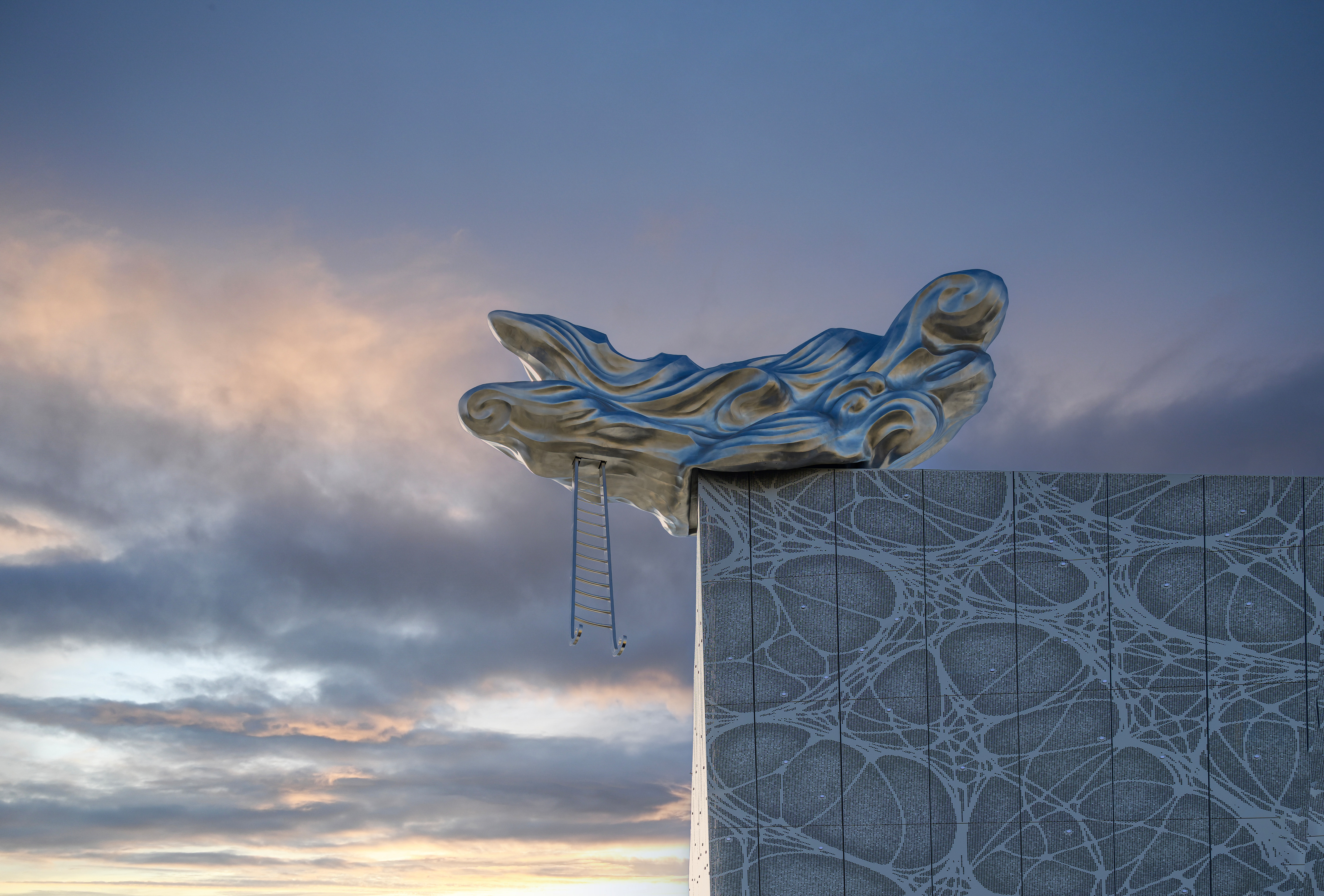
Cloud sculpture: Luk Van Soom
Façade design and development: René Pijnenburg and Béla Zsigmond
Architecture: Luc de Hovre, WITH 20 architecten
Technical realisation of the sculpture: Art Casting in collaboration with Flor Broes and Afra Broes
Technical realisation of the façade: Metadecor
Led lighting: PWR Lighting
Subscribe to our newsletter and receive monthly news about LCL, our innovations, our services, our events